Search Results
Search this site
3004 results found with an empty search
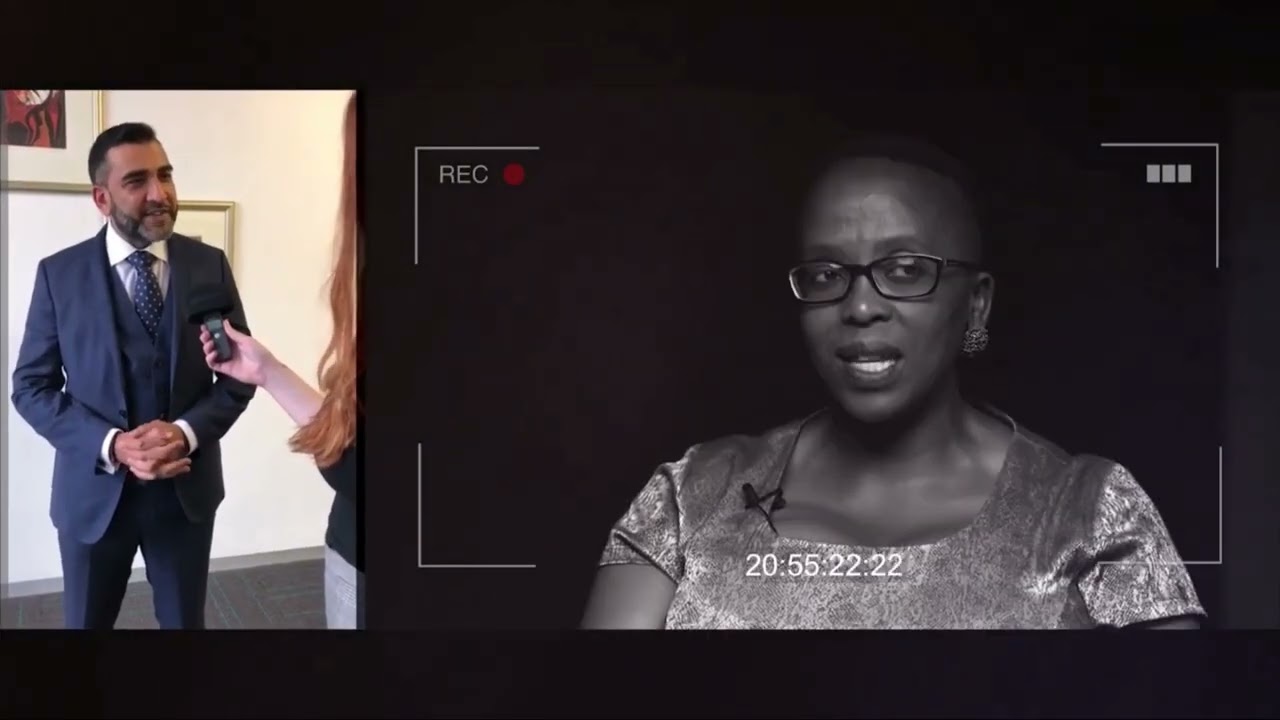
- Video interview with Prof Justin Barnes, the TWIMS Manufacturing Ambassador
Established by the Toyota Wessels Trust, Prof. Justin Barnes is the Toyota Wessels Institute for Manufacturing Studies (TWIMS) Manufacturing Ambassador, a not-for-profit initiative committed to nurturing manufacturing executives in Africa. As an inclusive institution, TWIMS welcome students from all industries. Within TWIMS, you will find exceptional facilities and dedicated staff, all contributing to a manufacturing community focused on creating value and bringing about societal transformation. TWIMS campus embodies a harmonious blend of contemporary architecture and cutting-edge technology, seamlessly integrated with the grandeur of a refurbished campus. Nestled in a serene corner of the campus, the TWIMS accommodation offers students a haven of high-quality and affordable lodging. Prof. Justin Barnes, an authority in the manufacturing industry, talks to us about how TWIMS was founded to provide a comprehensive range of courses aimed at cultivating world-class management capabilities that will drive industrialization across Africa. Together, we strive to empower our students and propel the continent toward a prosperous future.
- Aurik: This Week@Work – Unconscious Competence
This Week@Work Pavlo met with a business owner whose growth is being hindered by his unconscious competence – he’s mastered what he does to the point where he gets things done without thinking. It may seem like an advantage, but it can also lead to complacency. Watch as he discusses this ‘blind spot’ which affects many of us in our businesses. Your prosperity is largely in your hands. It's also in the wellbeing of your suppliers, customers, friends and family who run their own businesses. You're welcome to share This Week@Work with them. Subscribe to receive This Week @ Work www.aurik.com
- Aurik - Growing your company, despite the uncertainty in the world: if your business is not growing
If you are not growing your company, you are dying. The war in Ukraine, global supply chains, microchip scarcity, remote working, COVID, and inflation will kill your business… if you allow them to! Inflation in a business is like cancer in a body. It’s often not detected until it’s either too late or requires a massive effort to eradicate and remedy. The best way to understand how it works is to think about R1,000 and what you do with it. Say, inflation is running at 5%. If you place it in a current account, no interest is payable. At the end of the year, that R1K has the buying power of R950, and at the end of the following year, it’s worth around R900 and so on. Alternatively, you could place your R1k into a money market investment offering 4.5%. That way, before tax, you maintain the purchasing power of that money over the year. It’s worth R1,050 at the end of the year and so on. But the problem, of course, is tax and its impact on your purchasing power. That R50 interest earned can only be worth half of that, depending on your tax rate, but in any event, it still sees your money eroded. So here is the problem: many business owners don’t run calculations like this. They are too busy contending with the many challenges in the business environment. Their heads are also full of the deafening, seemingly relentless noise created by the information overflow generated by local, national, and global events. But you leave it in your current account because you need to have it at hand. Why do you need to have it at hand and readily accessible? Plan to plan, but no plan yet. This is likely to develop a growing aversion to risk as well as a mindset that only ever sees risk. If you are here, either sell your business or get some help to get into the next option below! The plan to sustain Do what you’ve done until you have an idea of what you want your business to be. Whilst it’s better than not having a plan, it’s not good enough. The reason is simple. In your industry, you have competitors that are planning and acting on their plans to grow. Their growth erodes your business. Make plans to expand. Turn an idea into a plan, a plan into a document, the document into action. Or, even better, you can anchor your business into the future by defining what your company needs to be: an Asset of Value™. You engage your leadership team to set the 3-year plan and your operational team to develop the 1-year plan. Once all are aligned, you work with that team to break the year’s plan into quarterly milestones (measured outcomes over time). Once done, you create a budget. Once done, you delegate and assign the budget. In this economy, business environment, political environment, and global environment, it’s tempting to feel overwhelmed, small, insignificant, unworthy, and incapable of growing your company and fulfilling your dreams and ambitions. Many people retain the shroud of an imposter, seemingly in control, up and at it and succeeding. The Jekyll and Hyde conflict exists in everyone – you are not an exception. It’s valuable to acknowledge and embrace. The frustration of this world must turn into anger. That anger must turn into positively inspired action. This is the turbine that propels action to make a difference and create a reality different from what we are told makes up the world. It’s a choice, and it’s in everyone’s power and self-interest to make it so. Originally published https://aurik.com/2022/03/08/despite-the-uncertainty-in-the-world-if-your-business-is-not-growing-its-dying/ Your prosperity is largely in your hands. It's also in the wellbeing of your suppliers, customers, friends and family who run their own businesses. You're welcome to share This Week@Work with them. Subscribe to receive This Week @ Work www.aurik.com
- DRG Outsourcing HR Article: Retrenchment in terms of Section 189a LRA
Dismissal of employees that is based on the operational requirements of the employer is regulated by Sections 189 and 189A of the Labour Relations Act 66 of 1995 (LRA). A Code of Good Practice has also been issued in terms of the LRA to govern the retrenchment process to be followed by an employer. Dismissals based on the employer’s operational requirements are more commonly known as retrenchments. Two types of retrenchment processes are distinguishable: small scale retrenchments and large-scale retrenchments. Small scale retrenchments are regulated by section 189 of the LRA, while large scale retrenchments are regulated by section 189A of the LRA When a company considers retrenchment, procedure must be followed in order to comply with the Labour Relations Act in respect of the retrenchment of any member of staff. The retrenchment process normally consists of two important stages: The decision by the employer that costs need to be reduced by means of retrenchment of staff (the economic rationale) Deciding on the best way to effect retrenchments to ensure that the process is fair. It is important that both employers and employees understand the requirements of the Labour Relations Act and how employees’ rights are protected. All employees (and their employers) involved in a retrenchment should at least be aware of the following: When management decides to reduce costs by retrenching staff, the employer must firstly seek avenues to minimise retrenchment. This could include for example requesting employees to work short time, eliminate overtime, or impose a timeous moratorium on appointing new staff, transfers, etc. An employer cannot simply make a unilateral decision and announce that short time is going to be worked with immediate effect to avoid retrenchment. Such a decision must be as a result of a process of consultation with the effected employees in order to comply with the fairness requirement. Consultation An employer is obliged to consult with its employees when it contemplates dismissing one or more of the employees for operational reasons. An employer may not assume that an employee will accept redeployment or transfer within the company unless the employee is contractually obliged to do so. An employer is required to provide its employees with a statutory notice in terms of section 189 (3) of the LRA which discloses in writing all relevant information relating to the proposed retrenchment prior to commencing the consultation process. An employer must consult not only on the consequences of the proposed retrenchment but in respect of the business needs and to be able to show that all reasonable alternatives have been considered prior to contemplating the need for retrenchment. An employer must thereafter engage in meaningful consultation with its employees or their representatives to achieve consensus. Meaningful consultation requires the employer to allow the employee or its representatives an opportunity during consultation to make representations about any matter connected with the proposed retrenchment and for the employer to respond. The Notice which is given in terms of Section 189(3) The employer must give notice to the affected employees of the need for the proposed retrenchment. This notice must be in writing and contain the necessary information for the consulting employees to make representations at the consultation. The necessary information includes, but is not limited to: reasons for the proposed retrenchment options considered by the employer to avoid the proposed retrenchment and the reasons for rejecting these options number of employees likely to be affected and their positions proposed selection criteria for selecting employees for retrenchment time when the retrenchment is likely to take effect proposed severance pay any assistance that the employer proposes to offer the employees who are retrenched possibility of future employment of the employees who may be retrenched number of employees of the employer; and/or number of employees that have been retrenched for the last 12 months. If the information on the notice is insufficient, the consulting employees may request the employer to disclose more information. For example, the employees may request the employer’s audited financial statements, where the reason for the proposed retrenchment is for cutting costs. Selection criteria An employer ought in most cases to apply the selection criteria of last in first out ("LIFO") subject to skills, qualifications and experience. It is the obligation of the employer to try and place potentially affected employees in the proposed new structure – on no account should existing employees be treated as applicants for employment. Severance pay An employer is required to consult with potentially affected employees on what a reasonable severance package ought to be. Many employers have policies and past practices in this regard. The severance package cannot be less than one week's remuneration from each completed year of service. An employee would also be entitled to notice pay in addition. Many employers, particularly in smaller retrenchments, are prepared to make an additional ex gratia payment to an employee in full and final settlement of all claims relating to the employee’s termination of employment to obtain finality and to avoid the costs and time involved in litigation. Tax directives The employer must submit a tax directive application to SARS before the lump sum amount is paid to the employee. The employer will apply for a tax directive by filling in an IRP3(a) form and sending it to SARS. Upon receipt of this form, SARS will work out the correct amount of employees’ tax that the employer must withhold on the severance benefit, and the employee will receive that benefit net of tax from the employer. The employer will issue the employee with an IRP5 tax certificate reflecting the gross amount of the benefit and the employees’ tax that was deducted. The employee will need to declare this in his annual income tax return. UIF claim process for retrenched individuals Retrenched individuals who have been contributing to Unemployment Insurance Fund (UIF) may claim for unemployment benefits. The amount of money that can be claimed: If one has worked for less than four years, one may claim for one day for every six days whereas if one’s contributions are more than four year’s one may can claim for a period of up to 238 days. The maximum payout does not exceed 58% of one’s daily earnings. Code of Good Practice on Dismissal Based on Operational requirements Whilst applying the formulations of the statutory provisions, employers should keep a watchful eye on the guidelines provided in the Code of Good Practice on Dismissal Based on Operational Requirements, as briefly outlined: The Code recognises the right of an employer to dismiss (retrench) employees if the reason is based on economical, technological, structural or similar needs. The code further recognise that retrenchment is categorised, as a ‘no fault’ dismissal i.e., the employee is not responsible for the termination of employment. The Code places an onus on the employer to explore alternatives to dismissals and further that the employees affected by retrenchment are treated fairly. Both procedural and substantive obligations are placed on the employer according to the Code. The Code highlights that the purpose of consultation is to participate in a joint consensus seeking exercise, to reach agreement if possible and for the process to commence as soon as possible. Further guidelines are that the employer must disclose all relevant information, that the topics for consultation provided in S 189(3) should not be a closed list and that the employer should keep an open mind on any viable alternative proposals. The guidelines in the Code clarifies that the period of consultation is not prescribed but that the consultation process should at least provide for an opportunity to meet and report back to employees, to meet with the employer and request, receive and consider information. Urgency of the retrenchments should not hinder proper consultations; however, the Code recognises that the process may become more truncated. The Code further provides detailed guidelines on the selection of employees that may be retrenched. Fair selection criteria according to the Code include length of service, skills and qualifications. The general neutral selection test however is the ‘last in first out’ (LIFO) principle. The Code requires that the offer of future re-employment in the event a suitable position becomes available be raised as part of the consultation process. The Code reflects on the minimum severance pay and points out that an employee may not be entitled to severance pay if the employee refuses a reasonable alternative offer of employment. Reasonable alternatives according to the code, is firstly the reasonableness of the offer and factors such as pay, job security and status and secondly the employee’s personal circumstances. Training Lay-off Scheme as alternative to retrenchment According to the Department of Labour, the Training Layoff Scheme was introduced and presented to the public in ‘response to the international economic crisis’ to the way that South Africa should respond to the economic challenges. The scheme acknowledged the importance of training and skills development and introduced it as follows: Training and skills development need to be prioritised, quality improved and the learnership programmes enhanced. In addition to other measures to avoid retrenchment, one further option that the parties will consider is training layoffs, financed by the National Skills Fund (NSF) and Sector Education and Training Authorities (SETAs), for workers whose employers would ordinarily retrench them and which can be introduced on terms that would keep them in employment during the economic downturn, but re-skill them as an investment for the future economic recovery. Any agreement to participate in the scheme will be facilitated and overseen by the CCMA and ultimately approved by the Department of Labour. https://drghumancapital.com/
- TWIMS - Showcasing next-gen manufacturing
Established by the Toyota SA Education Trust, TWIMS is a not-for-profit initiative dedicated to developing manufacturing executives in Africa. TWIMS is an open institution, welcoming students from all industries and backgrounds. The future of manufacturing will likely be characterised by significant disruptions driven by new technologies, rapidly changing customer preferences, and shifting market dynamics. Some key trends likely to impact manufacturing in the coming years include increasing digitalisation and automation, sustainability pressures, personalisation and customisation of products and services, and new manufacturing models driven by the Internet of Things, artificial intelligence (AI), Virtual and Augmented Reality, Additive Manufacturing, and smart materials. To succeed in this rapidly evolving landscape, manufacturers will need to develop effective business strategies that enable them to respond to emerging trends and challenges. Manufacturers will have to use technologies to optimise their existing processes and products, while simultaneously exploring more fundamental product and process changes. For example, manufacturers need to use AI to improve their quality assurance processes while exploring how to use Virtual Reality and Augmented Reality to change their production and product development processes. The manufacturing industry is likely to experience significant disruptions in the coming years, and companies that are able to adapt to these changes and develop effective digital business strategies will be best positioned to compete. Demonstration Space TWIMS has had the benefit of research in these manufacturing disruptors over the last few years and has identified the need for a demonstration space in KwaZulu-Natal where the various technologies can be showcased and directly experienced. Consequently, TWIMS has invested in a Future Manufacturing Management Sandbox at its Campus in Kloof. The Management Sandbox was launched in September 2022 by the chairperson of TWIMS, Andrew Kirby (President and CEO at Toyota South Africa). The event also included several CEOs and executive managers from the broader manufacturing sector. The Sandbox aims to introduce students and delegates from visiting firms to some of the future manufacturing technologies presently reshaping the manufacturing sector. The Sandbox has a fully IOT-enabled assembly line, including Augmented Reality, Virtual Reality, Artificial Intelligence, Visual Recognition Technology, and Radio Frequency Identification demonstrations. In addition, the components assembled on the line can be 3D printed in the Sandbox using Additive Manufacturing equipment. Prof Theuns Pelser, the executive director of TWIMS, emphasises that TWIMS’ Management Sandbox is designed to support experimentation and the exploration of emerging digital technologies presently reshaping manufacturing. The Sandbox is a unique Industry 4.0 “playpen”. Established in partnership with Jendamark and Rapid 3D, two of South Africa’s leading technology providers in the Industry 4.0 space, the Sandbox is intended to support digital transformation in the South African and broader regional manufacturing sector. TWIMS’ Management Sandbox is intended to be a valuable tool for future manufacturing exploration in South Africa, as it provides a controlled environment for testing and implementing new management strategies, processes, and technologies. Key Reasons Some of the key reasons why the TWIMS management sandbox is so essential: EXPERIMENTATION: A management sandbox allows businesses to test new ideas and approaches in a controlled environment without the risk of negatively impacting their current operations. This enables them to experiment with new management strategies, processes, and technologies and to evaluate their effectiveness before implementing them on a larger scale. RISK MITIGATION: By testing new manufacturing strategies and processes in a sandbox, businesses can identify potential risks and challenges early on and develop strategies to mitigate them. This can help reduce the risk of failure when implementing new initiatives in the real world. INNOVATION: A sandbox encourages innovation by allowing businesses to explore new ideas and approaches without fear of failure or negative consequences. This can help drive organisational creativity and innovation, leading to new products, services, and processes. LEARNING: A sandbox can also be a valuable learning tool for managers and employees, allowing them to learn new skills and techniques in a safe and supportive environment. This can help build organisational capacity and enhance overall business performance. We believe that the Management Sandbox at TWIMS will do precisely what sandboxes have done for the development of children over the years. By giving management a safe space to experiment, innovate and learn about the various Industry 4.0 technologies that will reshape their organisations, we anticipate that using the Sandbox will improve the competitiveness of the local industry. As the TFG Research Head of Future Manufacturing at TWIMS, Dr Malika Khodja Möller is directly responsible for the Sandbox. As a Doctor of Engineering, Dr Khodja understands the challenges of engaging with and making sense of Industry 4.0 technologies, arguing that: “By demonstrating a number of future technologies within the management sandbox, we essentially provide students and visitors with a practical engagement with the Future Manufacturing today. In doing so, we make the abstract more real and encourage appropriate technology adoption and future innovation”. For more information: Dr Malika Khodja-Möller, TFG Head of Future Manufacturing T: +27 31 767 5202 E: malika.khodja@twimsafrica.com W: www.twimsafrica.com
- Applications are open for TWIMS Future of Manufacturing Executive Short Course | 28-30 June
The Future of Manufacturing course considers how manufacturing is presently being disrupted by emerging technologies; how the future of manufacturing could potentially be shaped by these technologies; and the likely implications of these changes for both the South African and the broader African manufacturing sector. The course is exploratory in design and applies a range of strategic tools to interrogate and engage with disruptive markets and social and technological forces that are re-framing the future of manufacturing globally. In the first part of the course, Dr Justin Barnes and Dr Malika Khodja-Mōller introduce course participants to a set of innovation tools and then explore the rapid rise of the range of “Industry 4.0” disruptors that are presently challenging manufacturing business models. These include the Internet of Things (IoT) and industrial IoT, the use of “big data”, machine learning and artificial intelligence (AI), additive manufacturing (3D printing), the use of new Nano-technology-based materials and the rapidly emerging meta-verse, which is being driven by virtual reality advancements. We consider the consequences of these technology disruptions for markets and the value chains that supply them and explore how the range of technology disruptions are likely to frame how manufacturing is organized. Will manufacturing remain organized in the same way, or are new platform-based business models likely to emerge? Is the South African and broader African manufacturing sector closeted from these technology developments, or will changes occur in the same manner as being observed in developed economy markets? The second part of the course starts with immersion experiences in TWIMS’ Management Sandbox, which has a state-of-the-art “Industry 4.0” demonstration line encompassing Industrial IoT, Virtual and Augmented Reality, Big Data Analytics and Machine Learning, and 3D printing. On completion of the immersion, course participants are allocated to project teams to work on the application of their learnings. Using opportunities and challenges facing firms represented within the course, the teams prepare presentations to a “mock” board advocating for company resource deployment in response to a technology disruptor. Once teams have presented their findings, a consolidation session exploring the strategic consequences of the material covered for participating companies completes the course. Click here for more info Click here to apply twimsafrica.com
- Aurik - Building a business backwards
Pavlo reflects on a business owner who had worked with Aurik and recently sold his company for 120 million. When Pavlo mentioned this purchase to another business owner, the response was: “He must be really lucky to land such a deal.” Luck does count – where you are located matters, timing can matter but largely, it has very little to do with luck. For a business to have a high valuation in the sale, the business needs to be built backwards, starting with the end in mind and designing it towards the end goal. This business was built eight years ago with the intention to sell it in the long run. When asked how much he would sell the business for, the owner said 100 million, and he was adamant on that number. To reward his years of investment, risk, and sacrifice, this was set as the target. The plan to act for tomorrow had to work backwards from that future date. He and Pavlo ran a few numbers. What they calculated is that five years forward he would need to have a revenue of 85 million, profitability running at least 15% to be able to argue and justify a multiple of around eight. If you take the initial 85 million, multiply it by 15%, and multiply it by eight, you’ll get something like the 100 million target. On average, most businesses are lucky to earn three or four multiples. But the reason for that is that when most people sell their businesses, they arrive at that point at the 11th hour after 10, 20 or even 30 years of successfully generating income. They learn that what they have built is a business that’s good at generating income but not a business that is transferable as an asset to the future buyer or acquirer. As a result, they are heavily penalised for the multiple. The multiple is an indicator that effectively answers five questions. To illustrate the point, let’s use an example of a furniture business: There are 10,000 furniture businesses out there, and the buyer needs to see that you’ve distinguished yourself, and your brand positioning within the furniture industry is good. Your brand needs to be recognized and appreciated by your customers. That’s the one factor that would take you to approximately a three or four multiple. The second question is, “How does the whole thing work?” What business systems have been put in place? If you have translated all your commercial activities into business systems, then effectively you’ve got a playbook as to how the business works, and that takes the multiple up to four or five. The third thing they will ask is: “If you exit and are not there, who’s going to make it happen? ” You need to show that you’ve got a team that’s engaged, that’s motivated, that has been there for some time, that sees a future, especially with the new acquirer, and if you can show this, you have an additional multiple. Next question: “Will there be growth in the future? ” If the business is to grow at a higher rate than you’ve grown the business in the last two or three years; the acquirer shouldn’t be paying for that. You need to have shown growth prior to exiting. And then the last, and often toughest, question is: “Without you there, what happens to your suppliers? What happens to your team? What happens to your customers?” What is your influence in holding it all together and ensuring that the asset that is being bought from you today will perform the same tomorrow once you’ve left? If you address each of those five levers, you’re taking a three multiple to an eight multiple. You’re adding an additional point in each instance. And that’s what we mean by an engineered approach, which requires you to start with the endgame, saying, “I want 100 million for my business.” and then design the business to deliver that eight multiple. Why acquisitions fail to yield value: A Harvard study from 2016 estimated that 82% of acquisitions made, failed to yield value for the buyer. Very often, these acquisitions are made by listed companies, where there’s quite a bit of pressure to demonstrate how your investments are yielding shareholder value. They identified all of the major reasons why these acquisitions fail. The first is a misalignment of customers. You acquire a business, you believe you might be deepening your ability to reach a new market that’s similar to the one you already serve. But often, there is a misalignment. Secondly there are massive issues integrating the team in the client business with your existing team. In other words, getting a cultural match. The third reason is that the functions of how the business runs and operates are profoundly different from the way your business runs and operates. And the final reason is that once the owner is no longer there, the culture, values, and numerous other elements that held everything together simply disassemble, fragment, and fall away. Understand that when you are ready to leave a business, you need to serve and understand the needs of a new customer: The Buyer. The problem is that most of us arrive at this point with three, four, five, or six months left because we want to get out at that point. We make the decision to get out, and yet we have never built the business in such a fashion that it fits neatly with what the buyer wants. Start with the end in mind and build it backwards. Originally published https://aurik.com/2022/12/01/building-a-business-backwards/ Your prosperity is largely in your hands. It's also in the wellbeing of your suppliers, customers, friends and family who run their own businesses. You're welcome to share This Week@Work with them. Subscribe to receive This Week @ Work www.aurik.com
- “THE LIST.” - “Success is best when it's shared.”
KZN Top Business "The List" The KZN Top Business List comprises top companies or organisations whose performance and conduct have earned them respect and honour in their respective industries. How to Make the KZN Top Business List KZN Top Business “THE LIST” Questions and Answers 1. Why is KZN Top Business a great marketing platform? The KwaZulu-Natal Top Business Portfolio’s ongoing success has been achieved through the use of a number of methods including a comprehensive and well ranked multimedia website which is well optimised on a variety of search engines, an A5 hard copy handbook as well as a digital version, social media tools and a growing series of videos. 2. What type of companies does the KZN Top Business List comprise? The KZN Top Business List consists of successful c ompanies that are headquartered or have an office in KwaZulu- Natal and that are making a sustained and positive contribution to the KZN economy. 3. Why should your company be on the KZN The Top Business Portfolio provides a unique to opportunity to both emphasize your contribution to the province’s economy and market your company We assist in driving the visibility of brands, including growing relationships and improving client retention through targeted content marketing campaigns. 4. What services does KZN Top Business offer? Through our extensive pressroom services any general articles/news supplied by or produced by you will also be carried on our various web pages and social media platforms. These articles are archived and searchable on the internet as well as benefit from search engine optimisation. The articles are published, republished and widely circulated. There is no limit to the number of additional articles supplied. We highlight news, developments and opportunities through regular e-mails that are sent to an established and extensive subscribed database consisting of over 55,000 business executives 5. What criteria are considered important for participation in the KZN Top Business List? In accordance with the King IV report, companies should subscribe to the four governance outcomes which are: · An ethical culture – The entity is seen as a responsible business contributing to society as a whole – people, community, and environment. · Good performance and value creation – A focus on profitability as well as sustained employee wellbeing and the creation of customer and stakeholder value · Effective control and trust - Effective management and leadership is apparent along with the transfer knowledge and skills · Good reputation and legitimacy – Good internal and external communication and the distinct brand value of products/ services 6. How many companies are listed? The KZN Top Business List comprises a maximum of 100 companies which are updated regularly. 7. How do you get your company registered on the KZN Top Business List? Each company is reviewed on application to ensure that the Top Business criteria are met.
- Applications are open for the TWIMS Women As Manufacturing Leaders Executive Short Course 6-8 June
Course Overview Manufacturing battles to attract and retain women in leadership positions. With advanced technology changing the future skill set required in the industry, manufacturers need to tap the largest talent pool possible. Research has shown that women in leadership positions can provide greater diversity of perspectives, innovation and a more balanced approach to management. Yet women leaders still experience significant challenges and contradictions in influencing their male-dominated organisations. Simply increasing the number of women leaders in organisations is no guarantee for the empowerment of other women or the transformation of organisations. This course explores the specific gender challenges experienced in the manufacturing context, both from a leadership and blue-collar worker perspective. It explores how to develop your authentic and distinctive leadership qualities to impact the culture of your organisation. It also highlights issues affecting women in blue collar positions to promote action towards greater inclusivity of women at all levels of manufacturing. The aim of the programme is to equip women leaders as change agents within their organisations by championing these issues with knowledge, self-awareness and personal effectiveness. Course Cost The course costs R12 780 per participant. This is fully inclusive of all refreshments, teas and includes lunch over the three days, as well as stationery. The cost excludes accommodation. Venue and Accommodation The course is run at the TWIMS campus, 74 Everton Road, Kloof. Each day starts at 8:30 and concludes at 16:30. Accommodation is available on-site at an additional cost. Please visit the TWIMS website (www.twimsafrica.com) for further details. DOWNLOAD BROCHURE APPLY NOW
- Arch Retails Systems e-commerce partner to Ultra Liquors
Ultra Liquors, a prominent player in the liquor trade, has seen aggressive growth during the past three decades. The group now has a total of 126 corporate and franchise stores across South Africa, and it's growing. It supplies household consumers and over 1 800 businesses with their liquor requirements. As a partner of Arch Retail Solutions, Ultra Liquors uses the suite of Arch solutions in its business. COVID-19 necessitated the development and implementation of an Ultra Liquors online shopping platform. Arch e-Store, an integrated e-commerce platform, was developed and implemented in Ultra. The online shopping platform integrates with the existing Arch backbone in the business, supplying consolidated management information on which strategic decisions are made. For more information on Arch eStore, visit: https://www.archsoftware.co.za/solutions/arch-estore/ Ultra’s online digital store has a fresh modern look with the goal of making shopping easier and more engaging – https://goodwood.ultraliquors.co.za/ Some of the new interactive capabilities and functionality of the Arch eStore/Ultra Liquors online shopping platform include: A responsive mobile website: eStore adapts to different screen sizes to deliver pixel-perfect experiences for the online consumer regardless of the device used; User-friendly navigation: Helps visitors easily browse products, look for information and check out; Search engine optimisation (SEO) friendly pages: This ensures the Ultra website is found on search engines such as Google; Increased speed, performance and stability: Critical for an e-commerce site to be speedy and stable as it has a direct correlation to sales; Transparent information pages: These pages provide consumers with useful information that can affect their buying decisions, show how thoughtful Ultra is and increase the store’s reputation; Multiple wish-lists: Consumers can store or save specific items in more than one wish-list, which they can buy later by returning to the store – gives consumers an easy reminder of a product and helps the store to track interest in the product; Blog: A blog is an effective content marketing channel for Ultra to attract new visitors and turn them into loyal buyers – enhances SEO visibility significantly; Intuitive search: Includes ‘previous searches’, ‘trending now’ and ‘quick category links’; Product filtering: Filters allow consumers to shortlist Ultra Liquors’ products based on their parameters; POPI compliance: Allows customers of Ultra to export and view their personal data and delete their accounts permanently; Social media links: Linking the Ultra eStore to social media platforms drives more traffic, increases follower counts and enables consumers to have direct contact; and Reports and analytics tool: Reports are essential to Ultra Liquors to measure its website's performance and to plan strategy. Besides revenues and the number of products sold, there are other metrics worth knowing. This include sales conversion rate, website traffic, e-mail opt-in rate, average consumer value and cart abandonment rate, all of which can be measured via Google Analytics. Casey-Lee Perry, Arch eStore Product Owner at Arch Retail, says: “We are proud that Ultra Liquors selected Arch eStore as their digital online solution. In partnership, the solution has been refined to offer discerning Ultra customers an impressive and effective alternative shopping platform.” * Article first published on itweb.africa
- New Eswatini Air Route To Durban Set To Boost Tourism and Trade
Durban, South Africa - Eswatini Air, the national carrier of the Kingdom of Eswatini, has launched a new route between King Mswati III International Airport in Manzini, Eswatini, and King Shaka International Airport in Durban, South Africa. The route commenced operations on the 5th of May 2023. The route will be operated by an Embraer ERJ 145 aircraft with a maximum capacity of 50 passengers, and initially, three flights per week will be available on Mondays, Thursdays, and Saturdays, with plans to increase frequencies to seven times a week from June 2023, based on demand. Speaking about the new route, Mr Siboniso Duma the MEC for Economic Development, Tourism and Environmental Affairs and the leader of Government Business in KwaZulu-Natal said, "We are pleased to announce the launch of our new route between Eswatini and Durban. This route not only enhances the tourism potential between the two destinations but also strengthens trade relations. 'Eswatini is one of the key regional tourism markets and shares strong historical and cultural ties with the province of KwaZulu-Natal. Pre-pandemic, tourist arrivals from Eswatini averaged 290 000 per annum and in 2022 tourist arrivals demonstrated a strong recovery of 89%. This presents an exciting opportunity for Eswatini Air to grow as a partner in accelerating the recovery of tourism between the two destinations." The introduction of this new route is expected to facilitate trade between KwaZulu-Natal and Eswatini, further strengthening the already strong economic relations between the two destinations. According to the World Bank, over 60% of exports from Eswatini come to South Africa, and over 80% of Eswatini's imports come from South Africa. The new route will also provide a significant boost to the regional tourism market, with Eswatini being one of the key regional tourism markets and having strong historical and cultural ties with the province of KwaZulu-Natal. Deputy Chairperson of Economic Development and Planning Committee in eThekwini, Councillor Phili Ndlovu said: "We are excited about the launch of this new route into Durban as we work to drive the recovery of our tourism sector. “As the eThekwini Municipality, we look forward to working closely with Eswatini Air, by creating awareness of the new route and providing support to the airline in an effort to demonstrate our commitment to strengthening relationships with our African counterparts and showing the socio-economic benefits of making tourism a priority in achieving a development agenda. Attracting more direct airlines to eThekwini remains key in order to boost tourism and trade.” To celebrate the launch of the new route, the government of KwaZulu-Natal and Eswatini Air, hosted a delegation of 40 Eswatini dignitaries on board the inaugural flight, which included the Minister of Public Works and Transport, the Minister of Tourism, key media, and select tour operators, in order to facilitate both tourism and trade on the new route. Mr Nkosinathi Myataza, ACSA Regional General Manager at King Shaka International Airport concluded by saying “The inaugural flight reinforces the importance of the aviation industry and how it remains a key mode of transport, generating significant benefits for an economy, by enabling tourism and trade, more significant in the context of the IAfCTA. But more so, connecting friends and relatives of these two countries especially the KZN Region with a long history of fraternal relations. It can also not escape us that this is Africa month where we celebrate our continent.” The inaugural flight reinforces the importance of the aviation industry and how it remains a key mode of transport, generating significant benefits for an economy, by enabling tourism and trade, more significant in the context of the IAfCTA. But more so, connecting friends and relatives of these two countries especially the KZN Region with a long history of fraternal relations. It can also not escape us that this is Africa month where we celebrate our continent.” Media Contact: Durban Direct: Vincent Zwane vincent.zwane@dubetradeport.co.za Eswatini Air: Batsabile Nkambule batsabilen@renac.co.sz Durban Direct A multi-entity and departmental committee of KwaZulu-Natal dedicated to driving the coordination and promotion of air services at King Shaka International Airport. Eswatini Air Eswatini Air is an Eswatini-based airline and the flag carrier for the nation.
- Register for this free TWIMS Breakfast Seminar - 30 May 2023
Many countries are seeing a revival of industrial policy. This previously discredited approach has found new believers. As national economies and international trade were liberalized after the stagflation of the late 1970s, governments increasingly decided to allow corporate behavior to follow commercial logic. Multinationals set up shop where it made most sense, allocating resources, outsourcing labor, and automating factories to minimize costs and maximize profits. The reforms lifted hundreds of millions out of poverty even as they delivered fat returns for shareholders. But what is the right way for Africa and South Africa to promote an industrial revival and manufacturing, in particular? In 1975-2014 manufacturing’s share of GDP in sub-Saharan Africa fell from 19% to 11%. As much of the continent opened to imports in the 1990s, manufacturers struggled to hold their own against hyper-competitive Chinese firms with the scale to drive down costs. Which begs the questions, is South Africa suffering from premature deindustrialization? It is not enough for government(s) to do no harm, but what needs to be done? In this free seminar, Francois Fouche, Executive Director of Growth Diagnostics, will explore the manufacturing sector via a macroeconomic analysis of the manufacturing sector. Whereto from here? How to adjust and where to find new growth opportunities. To register, click https://twimsafrica.com/twims-breakfast-seminar/