Search Results
Search this site
3004 results found with an empty search
- Mano Singh – Standard Bank
Mano Singh has studied almost continually her whole life while climbing the corporate ladder. Her father was a big influence on her life who taught her that education was vital. “I learned that if I were to grow and succeed, formal education was key to validating me as a person, while also keeping my mind focused on the future. Education gave me the confidence that I could take on new challenges as they arose and allowed me to walk away from any situation that questioned my self-worth.” Her father also taught her the value of humility and respect for all, and that when it came to integrity there was no room for compromise. “My mother was bold, audacious and confident and she made sure I learned that I should never give up, no matter the circumstances.” Mano believes that women should invest in their own networks in order to establish a strong support system that helps facilitate and maximise success.
- Samantha Watt – Say Watt
Samantha Watt has a passion for influencing hearts and minds through the art of public relations. While her core business is public relations this includes marketing strategy, events, web development, social media and/or brand development and activation. She says, “We are idea generators and content creators. I love telling our clients that we are dream chasers.” Samantha started her own agency after leaving her nine to five job to meet her desire to be the best mom and wife that she could be. She adds that she has succeeded through the grace of God and through the support of her husband. Samantha’s goal is to have an impact on the world. “Our dream is that no brand, big or small, in South Africa ever has to go unbranded or unheard. We are committed to keeping our costs low and competitive while still providing the quality that our clients have come to know and enjoy.”
- Dawn Dunn – Rugby commentator and businesswoman
Dawn Dunn wears many caps but the one she is most well-known for is ‘Rugby nut’. Her story is an incredible one. A previously disadvantaged black female who grew up during apartheid in a township, would not be your idea of the traditional rugby expert. Her technical knowledge together with her eclectic, vivacious nature bring a fresh take on the Rugby commentator. She is well known, loved Rugby personality who has interacted with many of the rugby fraternity and has an uncanny knack for seeing patterns that even seasoned journalists don’t pick up. Her ongoing podcast with co-host Lauren Terras focusing on the achievements of women in sports are inspirational. Dawn is a powerhouse of a business woman. She has successfully run an events, marketing and PR business since 2003 and is responsible for innovative events around South Africa. With the advent of the Covid-19 pandemic, she has diversified into the online space proving that there are always opportunities in any situation.
- Portia Mthembu – Standard Bank
Portia Mthembu has been in the employ of Standard Bank for the past 17 years. During this time Portia has fulfilled various roles within the bank and her career aspirations are to add more value to the organisation in the future. “I have the leadership skills and knowledge to succeed within the bank. In addition, the bank is committed to invest in my ongoing development at a personal and business level,” explains Portia. Portia has successfully led big Standard Bank branches in KwaZulu-Natal and has ensured their financial growth and sustainability. As such in 2019, she was recognised with a ‘Mark of Excellence’ trip to Brazil. “I aspire to add value and excel in any environment with which I have been entrusted. I have been blessed to be part of the Standard Bank family; my blood is blue, and I am proud of it.” Further to her career, Portia is the proud mother of three beautiful children and has a loving and supportive husband.
- Nozibele Sogoni - Nozibele Solutions
Nozibele Sogoni whose first name means ‘be kind’ is the founder and managing director of Nozibele Solutions which was launched in 2013. She is a motivational speaker, SETA accredited mentor and coach as well as a trainer. Nozi launched her woman owned level 1 BBEE company in 2013. Her goal is to offer solutions to entrepreneurs in the South African marketplace. Nozie says, “I believe that entrepreneurship has the power to change the economic landscape of the country.” She motivates entrepreneurs to develop their internal muscles while focusing on self-development to be “the best you that you can be”. Through attending her three-month self-mastery course, entrepreneurs are encouraged to find their gifts and set goals for themselves and their businesses aligned to their passions.
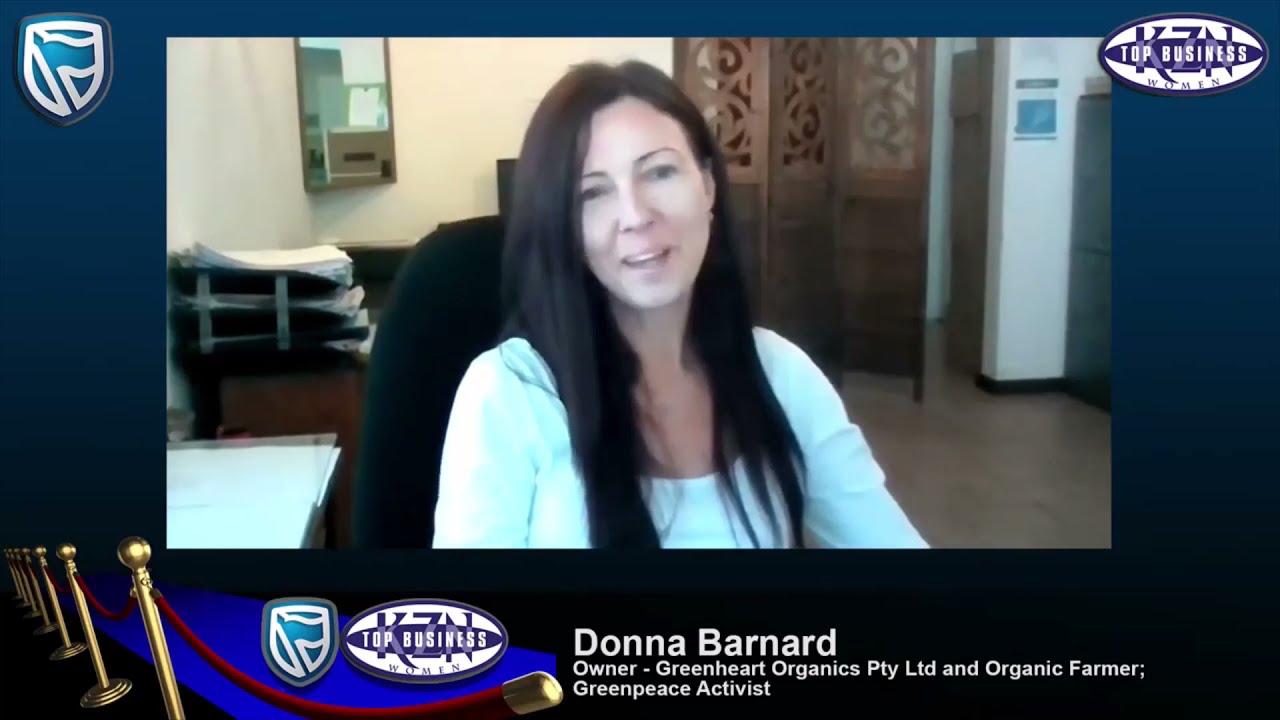
- Catch Donna Barnard live 18th Nov 6.30pm Standard Bank KZN Top Business Women 2021 Gala Dinner
After over a decade of business experience which was gained through the startup and running of Console Care, a home-based nursing agency, Donna Barnard has found herself in an entirely different arena with a growing passion for organic food and farming. In 2017, she embarked on an entrepreneurial journey and centred Greenheart Organics around the simple purpose of sourcing and supplying pesticide and chemical free food to family and friends. This demand has grown slowly and steadily over a four-year period and Donna has faced challenges which have impacted every facet of life as she once knew it. Her accomplishments include anything from packing orders until the early hours of the morning, to building an ecommerce website, to arriving home covered in black jacks, boots cacked in dirt and smelling of worm wee while she attempted her new role in farming an organic farmstead. Donna has recently become a Greenpeace activist which aims to campaign against the growing food sovereignty crisis.
- Fatima Moolla – Dynamic leadership producing results for incubator
Fatima Moolla joined SmartXchange in 2015 as centre manager at the newly established branch in Port Shepstone. This branch was a game-changer for the organisation as its reach was expanded away from an urban area to a small town. Fatima’s dynamic leadership produced amazing results as the Port Shepstone incubator grew beyond expectations and exceeded its three-year targets within the first year. The incubator has received local recognition by winning the Port Shepstone Mayoral Award twice since inception and contributed to the overall recognition of SmartXchange as a provincial and national leader in the incubation ecosystem. Fatima’s agility ensures that the SmartXchange’s support services are professionally executed by her team, which presents them with many opportunities to interact with aspirant entrepreneurs and innovators. The era of digitisation and the shift toward 4IR technologies has created opportunities for the development of innovative solutions that address challenges and provide solutions that are effective and ‘SMART’. These solutions include all spheres of human activities so that societies can benefit from improved processes, products and services. Fatima says that working at SmartXchange and being part of the entrepreneurial journey, supporting and contributing towards the success of a small business or the development of an innovation has rewards that are far beyond any expectation. This is an ecosystem that is constantly evolving, providing opportunities to interact with people and communities and ultimately supporting new developments that will lead to the growth and sustainability of previously marginalised sectors of society. “I get super excited as I see the growth and development of our startups during our mentoring and business development sessions. I am proud to announce that four innovations, which are currently being commercialised, were developed at Port Shepstone: Innovate Logistics – an optimisation of delivery loads; Eazi Health ID – a 360-degree medical app that manages patients’ records, bookings, referrals etc.; Smart Bee Hive Management – uses technology to manage the ‘well-being’ and harvesting of a beehive and SA Smart Film Art – a platform promoting local film content. Fatima admits that this job comes with challenges whilst the opportunities encourage her to persevere. The accessibility of cheap, reliable internet connectivity is a major challenge in township and rural areas as we strive to build communities and societies that can prosper through fair and equitable access to information, data and resources. The incubation of a company that provides internet connectivity to township and rural areas using the concept of Television White Spaces (TVWS) provided much excitement. This technology means that previously disadvantaged and inaccessible communities have an opportunity to digitise their products and services while the democratisation of technology and enabling the transfer of knowledge is contributed to. With her experience in setting up the Port Shepstone SmartXchange Incubator, Fatima was given the opportunity to lead the establishment of the Living Labs, funded by the National Technology Innovation Agency (TIA), in the KwaMashu Digital Hub. Fatima says that the Digital Hub in KwaMashu has created a strategic link to the township economy and that her team is now working on co-creation projects with their stakeholders and township communities to address the challenges faced by a lack of digitisation of local businesses. They are also addressing problems around domestic and industrial waste, crime and the lack of technology in early childhood centres. Fatima says that all their cocreation projects are focused on the integration of youth, women and people with physical challenges as the economic empowerment opportunities, within these groups, is miniscule when compared to the demands and expectations of these groupings. These engagements invariably result in measurable outcomes and impactful results within the communities. An incubator like SmartXchange can be regarded as a repository of resources and information that will enable small business to grow and innovations to develop as we provide the foundation and enabling resources for ideation, development, commercialization and growth. “I am blessed to be part of an organisation that is constantly evolving. My opportunities to learn and grow have increased exponentially as we embrace the 4IR and my passion to explore new opportunities for our SMMEs often keeps we awake, to enable my dreams of growing both rural and township economies to become a reality,” concluded Fatima. www.smartxchange.co.za
- Clarissa Johnston and Laura Strugnell inspiring new generations in South Africa
Clarissa Johnston and Laura Strugnell, 30 and 29 years old respectively, have recently returned from the Toyoko Olympic games where they competed in the artistic swimming event as a duet. Both swimmers came out of retirement to qualify and compete for the event while holding down fulltime jobs for most of the preparation time. The Games was their first international senior competition together. The pair were coached by Vicky Drinkwater and twotime Egyptian Olympian Reem Abdalazem. Laura Strugnell started synchro when she was five. She competed in every World Championships between 2011 to 2019. “After these last ones, it didn’t seem that South Africa was going to take the Olympic quota, so I retired. I found out in February of 2020 that they were taking the spot, and that they were going to hold trials,” she explained. As she needed a partner, Laura contacted Clarissa who was also living in Cape Town. Clarissa Johnston started synchro at age 12 when her family moved to Durban and synchro was offered at Durban Girls College. She swam with Laura on the 13-15 national team in 2005. In 2007, Clarissa was on the senior national team and competed against Egypt for the qualifying spot at the CANA Africa Olympic Trials. After that, she went to Lindenwood University in the United States until 2013. She swam with Reem on the A team during the 2010-2011 season and retired shortly thereafter. This decision meant that they needed to take every opportunity that they had to train in order to qualify and they won both duet events at the South African trials. “We both worked from 6am to about 1pm. Then, we would train until 4pm, and go back home to work some more. We would do that for three weeks or so a month. Then for one week, we would fly to Johannesburg to be with Vicky. The training there was closer to six or eight hours a day. “Honestly, even though I didn’t take such a big break from synchro, this is the hardest I’ve ever trained in my whole career,” said Clarissa. Laura teaches swimming professionally. “Not having our coach full time was quite hard. It was a lot to juggle. Vicky would give us training programmes that would last three weeks. We would then send her videos and get her feedback. We also would dial Reem in on Zoom for two hours, two to three times a week, and continue training that way,” she explained. Both Clarissa and Laura stopped working for July and August 2021 and moved to Johannesburg so that they could have in person coaching. Their coach had no funding from the federation, so has coached Clarissa and Laura for free while also juggling her own job. The duet’s Olympic goal was to reach scores in the 7s as a minimum, which they proudly achieved. The pair scored 72.1667 in their free routine preliminary and followed that up with 70.9099 in the technical routine. “We got a 72, which is the highest score South Africa’s ever got at a major international event. “It’s kind of been like a glass ceiling for South Africa. So whatever generation comes after us, we’ve set that for them,” concluded Clarissa. (Adapted from an article by Christina Marmet www.insidesynchro.org
- FreeMe Wildlife working together to enrich lives
With the ever-increasing human population and resulting development, wildlife throughout the world is coming under threat because of conflict with people in the race for space and resources to survive. South Africa is no exception. Indigenous animals are injured and orphaned because of human activities at an ever-increasing rate. FreeMe Wildlife was founded in 2007 when the need for a trauma and rehabilitation facility for these animals was identified in the KwaZulu-Natal midlands. The wildlife centre is situated on a two-hectare property, leased from the Oribi Trust on a 50-year lease in the town of Howick. The organisation is involved in the public engagement and professional action of capture, rescue, and rehabilitation and release of injured and orphaned indigenous wildlife in KwaZulu-Natal. The animals are released back into the wild in areas free from poaching and with reduced human activity. Experienced staff are employed (together with many varied specialists and volunteers) to run the centre and to provide quality care, which is in the best interest of the animals, no matter how big or small. FreeMe Wildlife has expertise in the care and rehabilitation of a host of indigenous wildlife species and the centre specialises in threatened or protected species (TOPS). The organisation’s main aim is to operate as a world class wildlife rehabilitation facility using the ‘One Health’ approach: linking human, animal, and environmental health. The secondary aim is to inspire an educated and engaging empathy for our wildlife and the environment. To meet the highest standards, FreeMe Wildlife has engaged in a policy of collaboration and cooperation with numerous conservation, environmental and specialist partners. Many of these partners are specialists in their chosen field of conservation and as such the organisation believes that with this assistance and support, a holistic and professional approach to its work can be achieved. FreeMe Wildlife currently holds a ‘consulting room’ status and is working towards ‘clinic status’ through the South African Veterinary Council. Part of registering as a clinic means a qualified vet is required on the staff compliment, and consequently, the finances to employ this person. FreeMe Wildlife aims to run various courses in wildlife veterinary fields for students (both local and international), interested in this field. Additionally, the organisation would like to offer an opportunity to CCS vets (Compulsory Community Service of one year after completing a veterinary degree), to work under the guidance of specialist wildlife vets and rehabilitators. The organisation believes that this opportunity will add value to future generations and to our wildlife industry on a professional level. During 2020 a long-term lease on the development site for FreeMe Wildlife Zululand was secured, as well as donations of materials for the building of the bird of prey recovery section. How can you get involved? FreeMe Wildlife is solely reliant on the public for funding and receives no government or local government assistance. As a public benefit organisation, FreeMe Wildlife does not solicit any fees for the work undertaken at the centre, and is completely reliant on donations from the public, fundraising projects, and trust grants. A challenge that is often faced is that potential funders are reluctant to grant funds for working costs and prefer ring fencing their grants for capital projects. Although this is understandable, it creates a catch-22 scenario where FreeMe Wildlife has wonderful facilities, but limited funds for staff or general costs. One solution has been the creation of the Custodianship Programme which is solely aimed at covering running costs. Corporate Custodians (and other Custodians) have become the life blood of the organisation. However, FreeMe Wildlife has been somewhat hampered by the financial constraints the coronavirus has placed on all sectors of the economy. Not only does Corporate Custodianship empower the organisation to provide the best service and care to the wild patients that are being rehabilitated, but as a Corporate Custodian you will receive certain benefits too: · Invites to all FreeMe Wildlife Custodian events. · Discounts on selected merchandise and services. · Networking with similar minded professionals. · Free advertising for your business. · A monthly newsletter. · A certificate of appreciation. · A Section 18A Tax Certificate The same benefits are available through subscribing to the FreeMe Wildlife Green Custodian programme. ‘The Islands of Hope’ concept promotes collaboration to respond to the needs of wildlife and the environment in our own communities. From the child exploring their own back yard to the members creating a new conservancy, an appreciation and protection for wildlife and natural areas is not limited to the confines of big game reserves. FreeMe Wildlife is confident that with sustainable funding the organisation can achieve its goal of becoming the best wildlife rehabilitation facility in southern Africa as well as be at the forefront of wildlife rehabilitation collaboration globally. Potential donors and sponsors are welcome to arrange a visit to the centre to appreciate first-hand the work being done and see for themselves why FreeMe Wildlife is considered to be a leader in professional wildlife rehabilitation. The office is open 24/7 for admittance of animals or callouts. FreeMe Wildlife Contact Details: T: +27 (0)33 330 3036 A/H Emergencies: 071 228 9082 E:: admin@freemewildlife.org W:: www.freemewildlife.org
- Mell Rijnvis – Virtual relaxation supports mental health
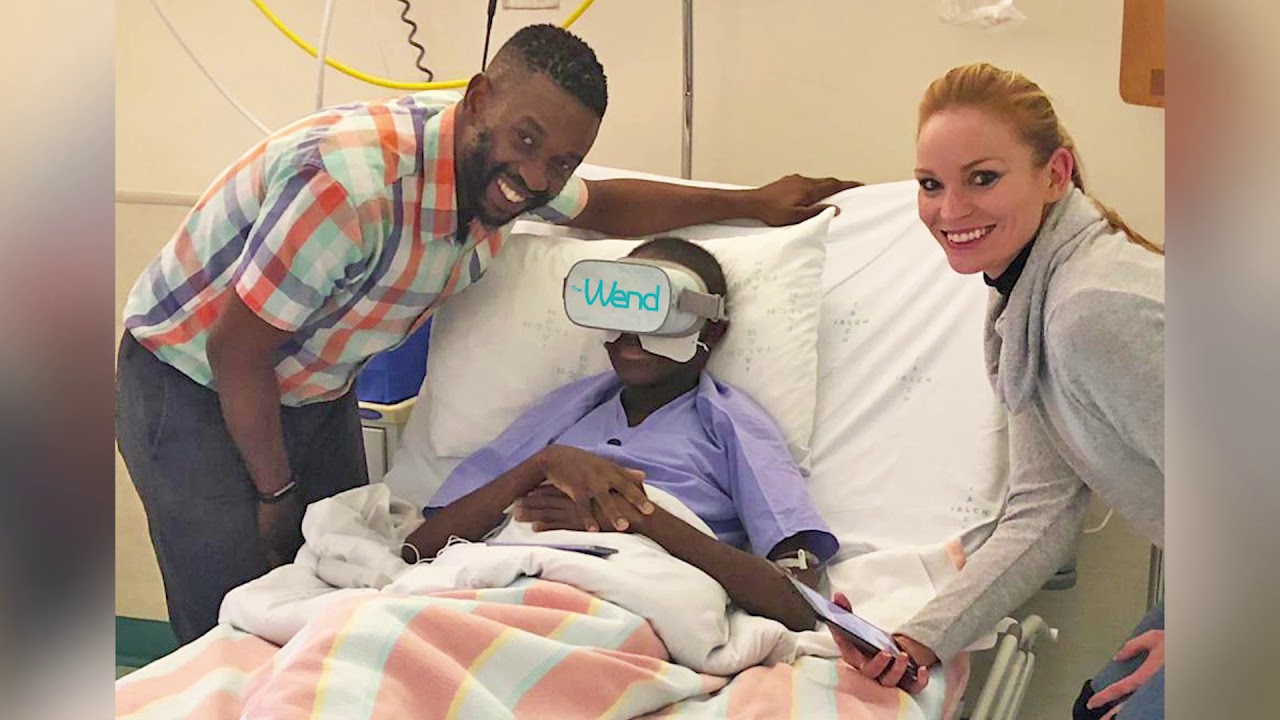
The World Health Organisation and the South African Department of Health call for immediate action to be taken. The mental health crisis has been deemed the ‘real pandemic’ and looking back in history at past crippling pandemics, the evidence is that the toll on humanity’s mental health will continue for many years to come. Luckily there is hope, as VR Wend have the solution to improve mental health in a fun and userfriendly way. That there is more to health than just a healthy diet and exercise is clear. After experiencing months of Covid-19, civil unrest, depression, anxiety, and the constant daily stresses, we have seen the negative impact these common issues have on our daily lives. We now realise how important it is to maintain our mental health as a nation if there is going to be any hope for a brighter tomorrow. The economic impact of negative mental health is significant as depression is one of the leading causes of an unproductive workforce, costing South Africa billions in sick leave taken each year. Followed on by chronic stress and PTSD (post-traumatic stress disorder), these soft spectrum mental health disorders move quietly and swiftly often causing destruction in our bodies and in our lives. The underlying problems they cause are far reaching and often go undetected until it is too late. VR Wend have found an ingenious solution to help people combat the mental health crisis. By using technology to bring people back to nature, VR Wend improves the mental health of hundreds of users through immersive 360° videos, healing sounds, binaural beats and ischochronic tones. A treatment only takes seven minutes to reach the desired results, which is perfectly suited to the pace of our current lifestyles. One brand that has identified the healing and calming benefits that this technology can bring to their clients, is internationally acclaimed professional skin care brand, Dermalogica. As a skin health brand, the primary focus is on customised solutions, holistic wellbeing, and the impact that our lifestyles have on skin condition. Believing in the healing power of touch, and the importance of connection, Dermalogica will introduce this technology into selected destination stores as a next step in advanced care, to offer a unique virtual relaxation treatment, further enhancing and promoting the holistic wellness experience for their customers. Managing director of VR Wend, Mell Rijnvis says, “The key is to be accessible and to reach people on a level they are comfortable with. In this day and age, technology is fast becoming a comfort for most but in reality the core of a human being craves nature. In this case Virtual Relaxation is the perfect fit, that provides an immersive experience which allows the brain to accept the information it receives as real. This experience triggers the release of powerful endorphins and natural hormones, that are highly beneficial to the body for healing.” Medically tested, Virtual Relaxation has many far-reaching benefits such as reducing the effects of stress, anxiety, PTSD, improving sleeping patterns, lowering blood pressure, and even reduces pain by 25%. But for the VR Wend team, the most important benefit is most definitely the way that you feel positively empowered after every treatment. T: +27 (0)66 150 1951 E: hello@thewend.co.za W: www.thewend.co.za
- Dr Fareed Amod – Is wisdom teeth removal necessary?
Thousands of wisdom tooth extractions are performed around the world each year by dentists or oral surgeons. Wisdom tooth extraction is a surgical procedure where one or more wisdom teeth — the four permanent adult teeth located at the very back of your mouth — are removed. What are wisdom teeth? Wisdom teeth are also known as third molars and are located at the back corners on the top and bottom of your mouth. These teeth are the last to appear in the mouth and typically erupt between the ages of 17 and 25. Why do we even have wisdom teeth? Most anthropologists and other scientists think that the purpose of wisdom teeth is related to our ancestors’ diet. Early humans consumed a lot of raw, unprocessed foods such as nuts, seeds, and tough meats. Consequently, by the time these humans reached their late teens or early twenties, their first and second set of molars would have experienced much damage. Evolution ensured that the human body compensated for this wear by producing a third set of molars — the wisdom teeth. In the current era most humans cook their food rather than eating it raw and use cutlery rather than relying on their teeth. As a result, we don’t really need wisdom teeth anymore. Future generations may not develop wisdom teeth and in some humans some or all wisdom teeth are already absent. As such, wisdom teeth, much like the appendix, are often considered to be unnecessary parts of the human body. They are also removed because most modern mouths are too small to fit these four extra teeth. So not only are they no longer necessary, but they can also result in oral health problems. As such many dentists recommend that wisdom teeth should be extracted during adolescence or early adulthood. When is surgery required? While there is no ideal age for wisdom teeth removal, people between the ages of 16 and 19 should have their wisdom teeth evaluated by a dentist to check if removal is necessary. Panoramic and digital X-rays help dentists see things that might be missed with a simple visual exam and allow any individual risks to be identified. The use of technology also helps the dentist to determine the best approach for the removal procedure. Your dentist may suggest that your wisdom teeth be removed if your teeth are crowded, misaligned or impacted. Crowding occurs when your teeth are too close together and pushing against other teeth which can cause damage. This can cause pain and lead to infection caused by the bacteria growing between the crowded teeth. Due to a lack of space, impacted teeth can grow sideways or crooked and lead to bigger problems. Atypical facial pain can occur if impacted wisdom teeth are not dealt with timeously. In many people, wisdom teeth are already affecting the health of their mouths before surgery is required. However, to prevent potential problems, some dentists and oral surgeons recommend wisdom tooth extraction even if the teeth aren’t currently causing problems. Your dentist will likely recommend wisdom tooth removal to avoid the following outcomes: · Tooth pain at the site · Trapped food that can cause decay · Damage to nearby teeth and gums · Damage to the jawbone · Irritated gums · Bacterial growth in the gumline of partially impacted teeth · Development of a cyst or tumour near the tooth · Infection · Shifting teeth · Jaw and gum disease Are there any value in wisdom teeth? Wisdom teeth can provide the support needed for a dental bridge and can fill in gaps left after the loss of another molar tooth. Of interest, a study has shown that wisdom teeth contain tissue for the creation of stem cells. In the future, experts are hoping that stem cells become a source of replacement cells to treat things such as heart disease, stroke and burns or even to create a new tooth. Removal process Your dentist may perform the wisdom tooth extraction procedure in the office under local anaesthetic. In addition to making the area numb with local anaesthetic, sedation may be suggested to allow you to be more comfortable during the procedure. However, if your teeth are deeply impacted or if the extraction requires an in-depth surgical approach, your dentist may suggest you see an oral surgeon as general anaesthesia might be more suited to you. Crown Dental Studio is one of the few truly 24-hour dental practises in Durban as this is not limited to emergency dentistry treatment. T: +27 81 207 8621 E: info@dramod.co.za W: www.dramod.co.za
- Dr Ahmed Shaikh – Adapt or die for education
Higher education institutions have long been considered to be the repositories of knowledge and learning and the structures through which knowledge is produced and disseminated. They have survived sweeping societal changes created by technology – the moveable-type printing press, previous industrial revolutions, information and communication technologies, electronic media and computers. Today, however, higher education institutions appear to be susceptible to technology disruption as much as other information-centric industries such as the news media, magazines and journals, encyclopaedias, music, movies and TV. This can be reflected in the fact that the transmission of knowledge does not have to be tethered to a fixed location or campus. The technical affordability of cloud-based computing, Artificial Intelligence based learning platforms, massive open online courses, high-quality streaming video, and ‘just-intime’ information gathering have pushed vast amounts of knowledge to the ‘placeless’ World Wide Web. This has sparked a re-examination of the role of contemporary higher education institutions within society. Developments including the globalisation of services work, the increasing value of domain expertise, rapid developments in educational technology and the rise of online open courses are creating both challenges and opportunities for incumbents as well as new entrants. The unbundling of research, educational delivery, content and block chain certification means that new business models and ways of engaging students will be at the heart of future higher education landscape. With the world in a state of major transition, education in general, and higher education in particular, becomes critical in this seismic shift because the transitions being experienced are centred on two essential elements – knowledge and skills. In addition, the pace of the decay of knowledge has increased significantly. In the past, a university student would enrol for a degree, graduate, and live off the knowledge obtained for at least 10 years. Today, by the time a qualification is achieved, the knowledge and competencies need to be refreshed. Without world-class expertise in our domain, we are reduced to being commodities. As these pools of deep knowledge around the world are connected, the phenomenon of collective intelligence is beginning to emerge. While this idea is not new, it is only in the last decade that we have become so richly connected through technology that collective intelligence is moving from a dream to reality. This is a major shift in who we are, our human identity, and in how we learn. The advent of and necessity for continual re-skilling will impact most on the graduate professional education segment, which has traditionally been structured around one- and two-year masters’ degree programmes. A widely held view is that such graduates will consume this lifelong learning in short spurts when they need it, rather than in relatively lengthier blocks of time as is the case presently. Equally, there appear to be many trends, pressures, and concerns that society through its political and economic leadership is imposing on higher education institutions. In today’s job market there is an increasing need for training and retraining of individuals. Thus, a focus on job-oriented education and on economic participation is driving an emphasis on relevance or on what can be called vocationalism – and thus changing the demand structure for higher education with profound effects on the support of, demand for, and appropriate preparation of participants for a rapidly changing job market that requires 21st century skills and competencies. The trend in economies is to turn from manufacturing to service, in which most new jobs do not require advanced education. Rather, human skill in creativity, imagination and problem-solving will become key differentiators in a hybrid workforce that involves collaboration between human talent and technology in the form of smart machines and robots. Finally, in conceding that education in general and higher education in particular are on the brink of huge disruptions, two questions have become paramount. What should young people be learning? And what credentials will indicate that they would be ready for the workforce? We believe that in order to remain relevant, higher education will have to fundamentally reorganise its current (post-industrial) model and engage in deep curriculum reform in order to match the skills revolution required for a complex and uncertain future. www.regent.ac.za