
AFRISAM BUILDS RESILIENCE WHILE AWAITING STRONGER INFRASTRUCTURE INVESTMENT
MEDIA RELEASE – 05/05/2026
AFRISAM BUILDS RESILIENCE WHILE AWAITING STRONGER INFRASTRUCTURE INVESTMENT
South Africa’s construction materials sector continues to face significant pressure, but early indicators suggest conditions may gradually improve. In response, AfriSam is focusing on operational resilience, continued investment in its production facilities and strong customer partnerships as the market navigates a slow and uneven recovery.
AfriSam Executive Chairman and CEO Eric Diack says the sector’s outlook remains closely linked to the pace of infrastructure investment across the country. In recent years, constrained public spending, rising input costs and shifting demand patterns have created a challenging environment for construction materials producers.
“The most important issue for our industry remains the level of infrastructure investment,” Diack says. “There are some encouraging developments, particularly in road infrastructure, which show what can happen when investment begins to gain momentum.”
While the market remains subdued, several road infrastructure projects are supporting demand for aggregates and readymix concrete. Work on key routes such as the N3 and N2 in KwaZulu-Natal and the N7 in the Western Cape is contributing to construction activity.
AfriSam’s national footprint of quarries and production plants positions the company well to supply these projects. Although current developments represent only a small portion of South Africa’s substantial infrastructure backlog, they highlight the opportunities that could emerge if infrastructure investment accelerates.
Diack notes that AfriSam has continued to prioritise upkeep on its production facilities to ensure plants remain in strong operating condition.
“Our board has been clear that we cannot compromise on maintaining our plants,” he says. “By continuing to invest, we ensure consistent product quality and remain ready to support customers as construction activity grows.”
Regional variations in construction activity are also evident, with the Western Cape showing stronger momentum than other parts of the country.
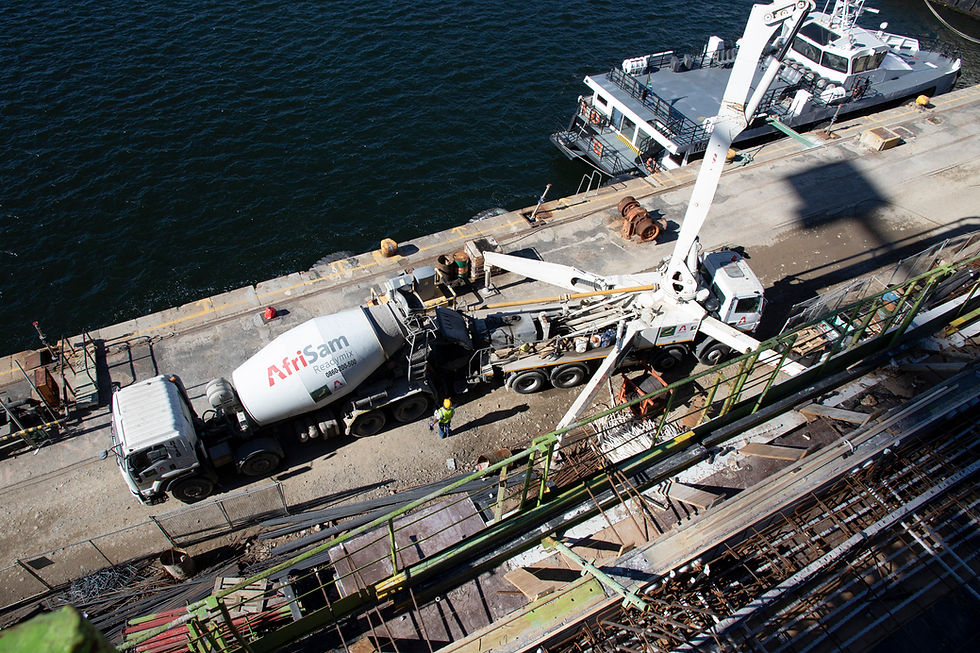
“There is clearly more confidence in the Western Cape at present,” Diack says. “Major developments under way in areas such as the Cape Town city bowl and Granger Bay will ultimately translate into increased cement demand.”
Despite these pockets of activity, overall cement volumes remain largely stagnant, notes AfriSam Sales and Marketing Executive Richard Tomes. At the same time, rising input costs continue to place pressure on the sector.
Energy costs remain a key concern for cement producers, with electricity representing one of the largest cost pressures for energy-intensive manufacturing processes.
“Even when national increases appear moderate, the structure of tariffs often results in higher effective increases for large industrial users,” Diack says.
Maintaining strict quality standards remains a non-negotiable priority for AfriSam, Tomes adds, noting that durable infrastructure depends on materials that consistently meet required specifications.
Logistics has also become more complex as the deterioration of South Africa’s rail network forces greater reliance on road transport, increasing both costs and supply chain challenges.
Drawing on more than 90 years of industry experience, AfriSam continues to build on its technical expertise and operational capabilities.
“Our cement business remains at the core of our operations,” says Diack. “When market conditions improve, we will be well positioned to respond.”



Comments